

Sydney Festival caught up with the co-creator and writer of Mama Does Derby, Australian favourite, Virginia Gay. An acclaimed stage and screen star, from Cyrano to Calamity Jane, Colin from Accounts to After the Verdict, Virginia is also an accomplished writer – Mama Does Derby the latest story to benefit from her boundless creativity, relatable storytelling and spicy wit.
Here Virginia spills on what to expect from her co-creation with Windmill's Clare Watson, what to look forward to, and what it all means.
Lessons learned? Coming back from trauma stronger, all bodies are beautiful, and Australia loves a kook.
SF: Virginia, could you give us the elevator pitch on Mama Does Derby? In a few words tell us: what can audiences expect, and what do you love about this show?
Virginia Gay: Mama Does Derby is theatrically inventive. It's exciting and dynamic. It's funny – it's a comedy-horror. And it's about some big ideas, though none of them will feel like big ideas.
Essentially, it's about that moment in life where your parents stop being your heroes and start being your triggers, and how you come back from that moment.
I wanted to make something for the stage that feels like Danny the Champion of the World, but with a mum and daughter. Something as quick and funny and chaotic and alive as The Gilmore Girls.
And I wanted to capture the feeling that all of Australia had, but I think young girls in particular, when they watched the Matildas in the [FIFA Women's World Cup] final. That feeling of suddenly – "Wait, sport is for me? Sport is exhilarating? Oh my god. Amazing."
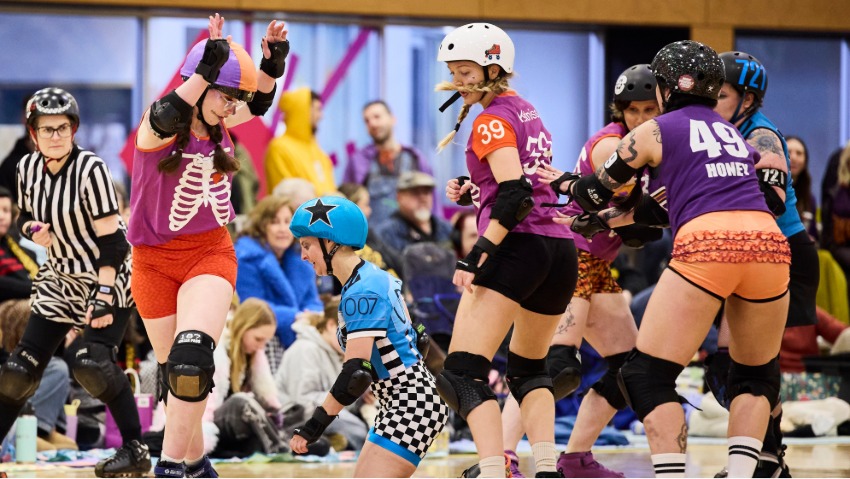
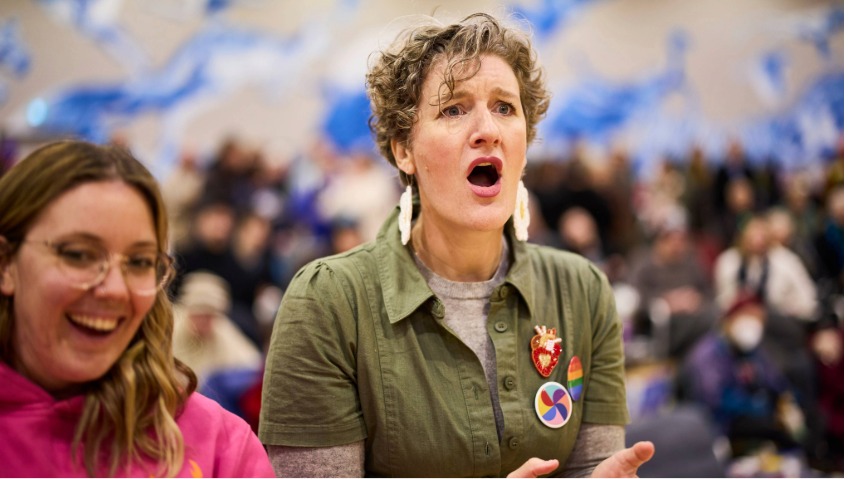
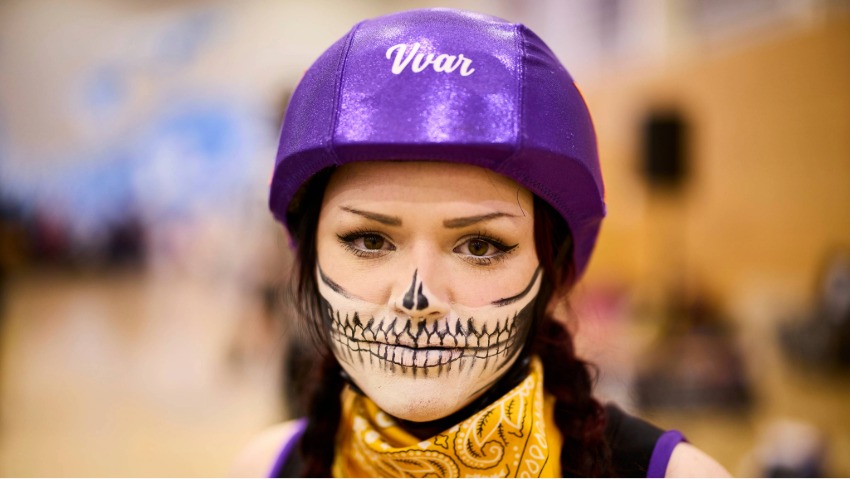
Scenes from the Adeleide Roller Derby Grand Final Bout, photography by Claudio Raschella
The show blends theatre, live music and roller derby in whirlwind fashion. What was the initial pitch or idea that convinced you this unusual collision of performance and sport had to be a story?
What's so exciting about roller derby is it's super lo-fi; it's got a really DIY aesthetic. And one of the most exhilarating things about theatre is the fact that it can be made with a gesture of a thing, but it still impacts you totally and fully.
Roller derby and theatre also share the exhilaration of having people do something extraordinary in front of you, in the same airspace as you. We're not separated by a screen; there are no controlling hands. You are here in this space with us, and it is exhilarating.
Tell us about working with Windmill's Clare Watson to conceive the show. What were the most exciting or challenging parts of that collaborative process?
Clare [Watson] came to me with the idea, and she said it's about a single mum and a daughter, and the mother discovers roller derby. I asked Clare a lot of questions about it, because I knew that Clare had done a lot of roller derby in her life. We've also been mates for 15 years, and I know Clare's daughter, Ivy, and I have seen Ivy grow up over 15 years and consider her a friend too.
Having seen their relationship grow, I feel very invested in both of the characters' stories as equal – as co-leads. There are no parents-as-villains statements. This is a grown woman in her forties who is trying to renegotiate a relationship with her body. And that feels so familiar to me and to so many of my friends. And I've also been a teenager – a shy teenager.
So from there, Clare and I started developing: how far can we take this story, how can we make it the most dynamic? We took it away from realism, and we took it away from the literalness of the mother-daughter relationship. Then we turned up the dial on everything, and pursued how dramatic and how exciting we could make it. And, as it's a comedy-horror, how many jump-scares and how much weirdness might help us express the horror of living?
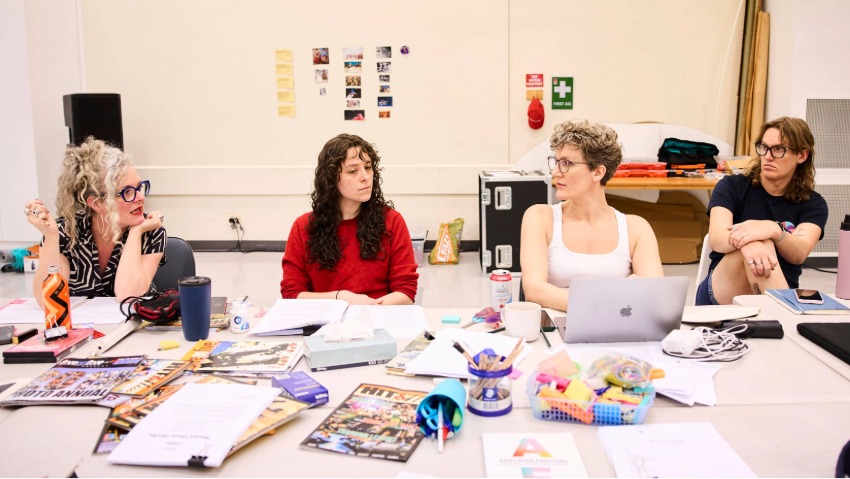
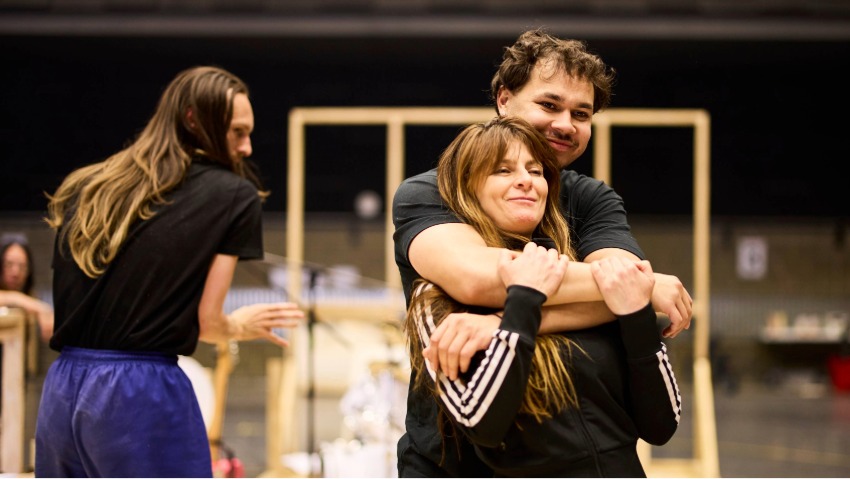

Scenes from Mama Does Derby rehearsals and creative development
You often celebrate queer narratives in your work, and the power of finding community outside of traditional structures. Roller derby is a famously diverse and inclusive space, a kind of chosen family. How vital was it to set your story in this world?
Absolutely vital. A friend of mine told me once that the secret to happiness is: something to be proud of, something to look forward to, and community.
That's so simple, so beautiful. The community is at the heart of [roller derby]. It is a really diverse community; it's a really inclusive community. And one that has worked really hard to make sure it's an inclusive community.
There are all types of bodies, and all genders are welcome. I think it's really important when you're showing bodies in movement to kids, to see a variety of bodies, and to show that all of these bodies are powerful, all of these bodies are valuable. They deserve love, they deserve praise. And as much as we can see that and be part of the people who are platforming that, that's a great thing to be able to do.
It’s such a powerful message – when everyone is able to see themselves represented on a stage. And what an unconventional stage to be showing those bodies on...
We're so thrilled and honoured that we are the Sydney Festival Town Hall experience this year. That is off the charts to us. We're like, "wait – we're the beach?* Oh my god!"
And it's so awesome that we can platform Australian work like that too, and say: this is Australian work at a global standard, with a global scope. So let's put it in that global slot. It's very cool.
*A reference to Sydney Festival 2023 Sydney Town Hall takeover, Sun & Sea.
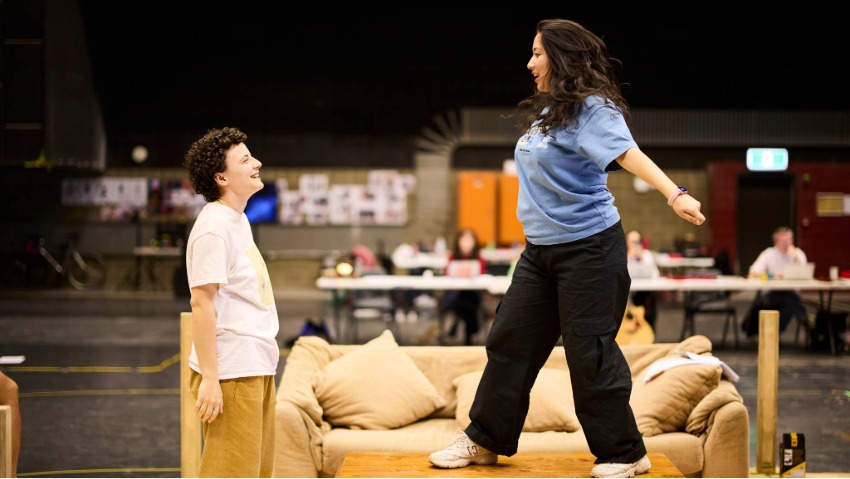
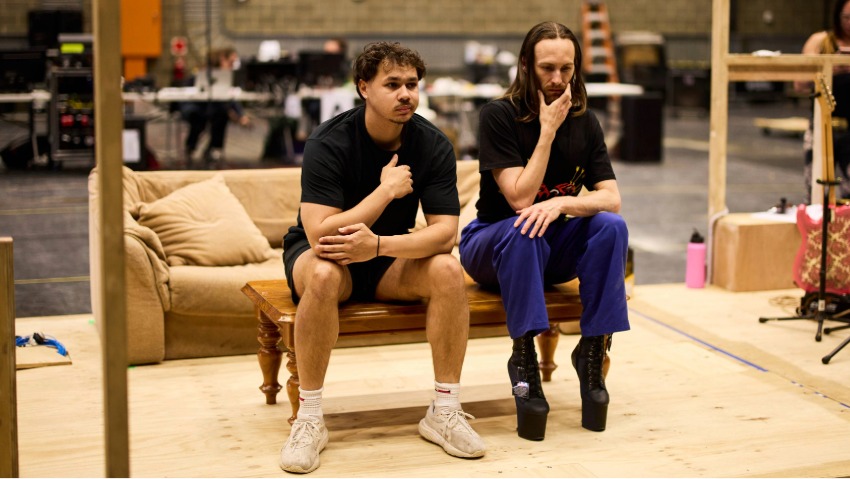

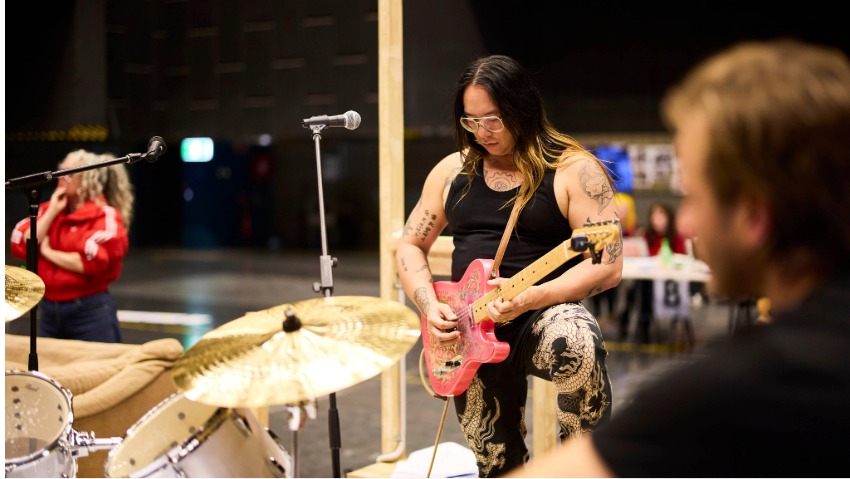
Scenes from Mama Does Derby rehearsals
What do you love about writing new Australian theatre?
I think Australians have a really fucking specific sense of humour – and we will not tolerate something that is only half funny. I really, really love that Aussies are like: yeah, it's sad, but if you can put a joke in the middle of the sadness, fuck that sad lands all the more, doesn't it?
I love that unique Australian voice – a deeply funny, deeply easy sort of voice. I fell in love with small towns when I was writing Boomkack, and I fell in love with the idea of that one IGA that closes at six, and what happens to the town when the pub closes at ten?
What do you do? How do you scratch your dopamine itch? I love honouring those places.
And I love the way Australia loves a kook – we just love our kooks. The stranger and the bolder these characters in these small towns are, the more we agree.
The mother-daughter relationship between Mum and Billie is the emotional anchor through the show. Were there aspects of navigating adolescent chaos alongside adult reinvention that you pulled from your personal experience?
I'm really close with my parents. I was the youngest in a family of much, much older people;. I hit eight or nine and I was answering the phone like a grown-up. So I certainly know that feeling of running at the speed of the grown-ups, because that's the world that you're in.
Then I think there's the body-horror that we all go through at puberty, the sense of, "This? I have to do life in this meat suit? God, why can't I get one of the other meat suits?" That feeling of your body betraying you around puberty and suddenly your emotions being a bit out of your control, and the things that you do to try and make it okay for other people. I never wanted anybody to be worried about me, and I didn't want anybody's pity.
But then there's the sort of second adolescent chaos that Mum is going through. The feeling of being halfway through your life and going, "This isn't it, is it? No, no, no. There's absolutely more, I've just got to keep going. I've got to keep moving." This also feels very true to me.
There's this second thing that happens, particularly with people who are born with uteruses, which is that you have a second hormonal shift around about your mid 40s to 50, where suddenly all of your hormones change. Suddenly you can't trust your body again. What do you do with this body? Is it still valuable? Is it still useful? Our two main characters are actually encountering two ends of the same extraordinary fluctuation.
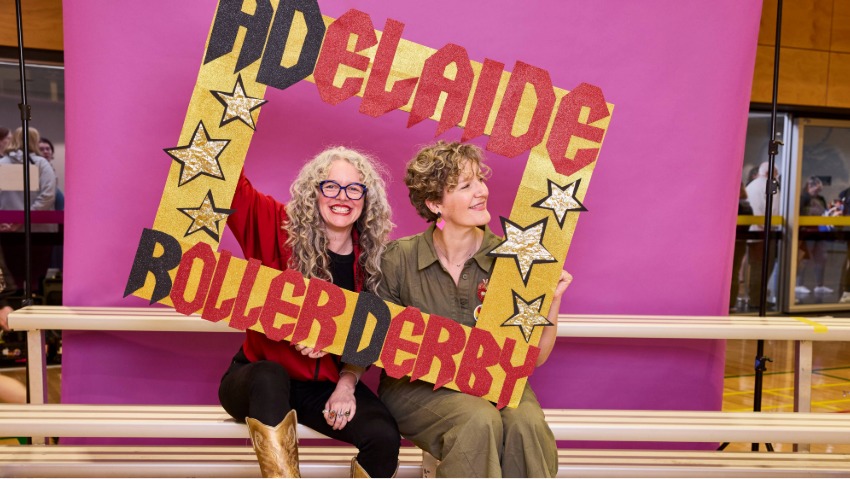
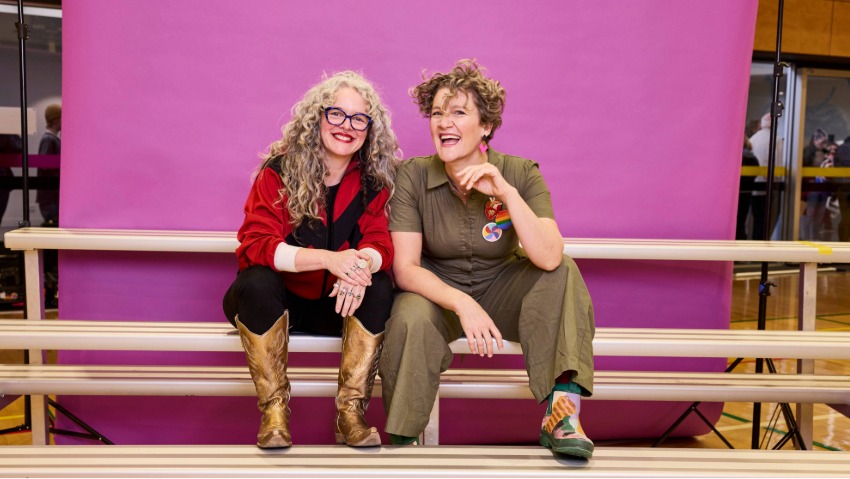
Clare Watson and Virginia Gay, co-coreators of Mama Does Derby
What lessons or comforts do you hope that audience members, and particularly mothers and daughters, will take away from the show?
When you are a kid you are so entwined with a parent, or parents, or a caregiver, because you are so dependent on them. The way that pulls apart, and the way that it comes back together in a more healthy, sustainable, productive and equalizing way is, I think, the great transformation of the piece. How you go through traumas to find a more hopeful and more useful post-trauma feeling.
I hope people take away that jokes are always important, and that great outfits are always important, and moving your body is important, and finding friendship and community. Widening your scope so that your central relationship can exist more successfully.
Mama Does Derby promises to be action-packed and boisterous. Without giving too much away, what is one moment in the show that you are most excited for the Sydney Festival audience to experience live?
I mean, the first time the derby screams out is going to be pretty fucking impressive.
The first time we see all of those derby players – actual local teams of derby players on the track moving at such speed, that's going to be phenomenal. In writing the play I've now seen several derby bouts, and the feeling of them going past at such speed is just electrifying. We also have a terrifying yet totally hilarious character I can't wait to reveal...
Mama Does Derby will run from 15 – 22 January at Sydney Town Hall. Join us before each performance for craft drinks and good vibes at The Grifter Brewing Co bar, brought to you by Doltone House.